
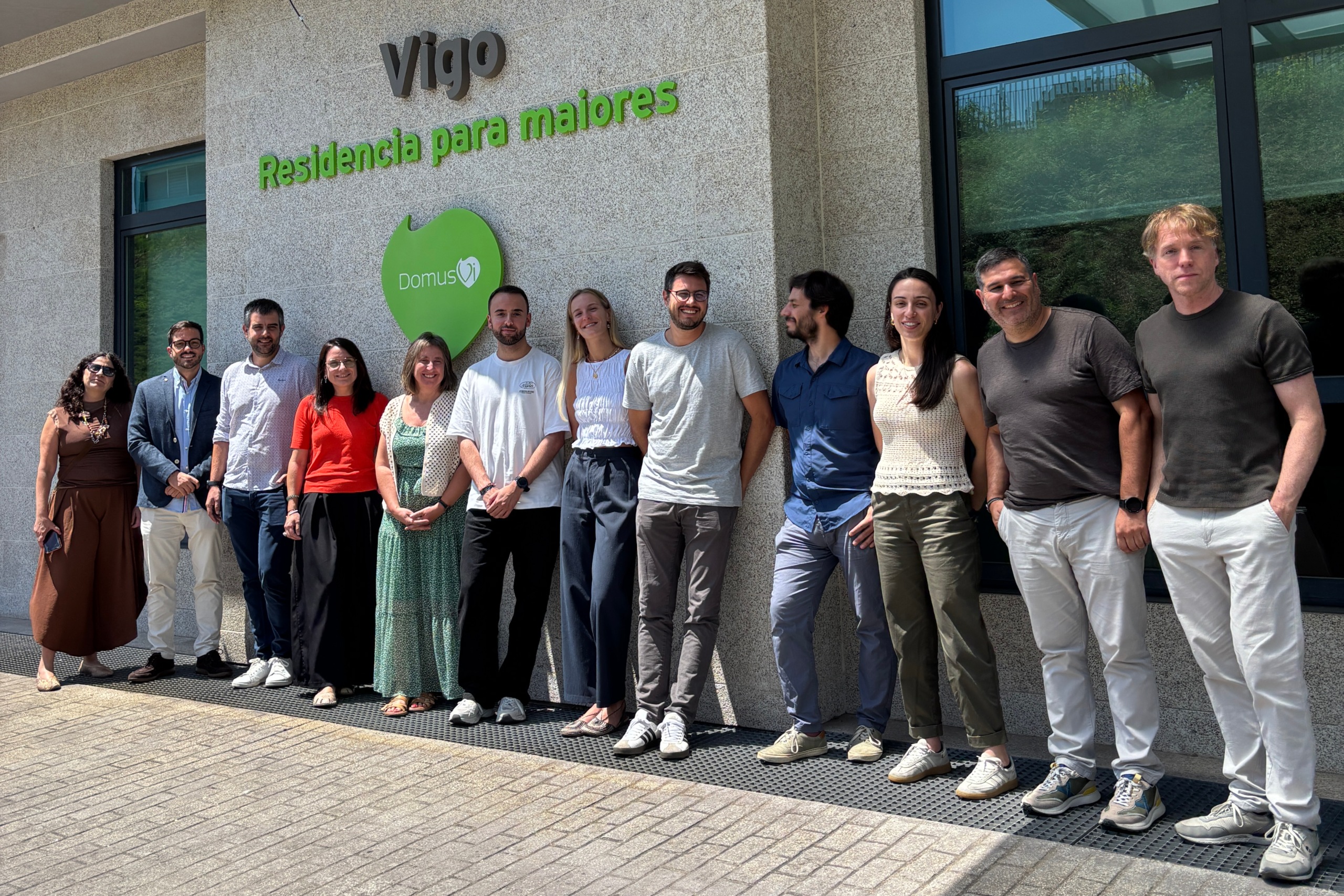
Balidea is taking part in STEP2HAD, a collaborative initiative that investigates the use of artificial intelligence, connected devices, advanced data analysis and other digital technologies to improve the care and monitoring of patients in the ‘Hospitalisation at Home’ scheme.
As part of STEP2HAD, Balidea is carrying out research and development into an artificial intelligence agent designed to support clinical decision-making. The company will co-design, alongside SERGAS’s Home Hospitalisation Unit, led by Dr Ignacio Novo Veleiro, a solution based on AI agents aimed at optimising care and service management processes, incorporating the expertise of HADO professionals into both the design and validation of the technology.
Anticipating risks and facilitating decision-making
STEP2HAD aims to improve the monitoring of people receiving care in their own homes. Its objectives include the early detection of high-risk situations, anticipating adverse events, supporting healthcare professionals in their decision-making, and improving the monitoring of the wellbeing of patients and carers.
Another area of its work is the creation of a health data system that enables information to be shared securely between different services, in line with European digital health initiatives and with the aim of facilitating more coordinated care.
The technologies developed will be tested in real-world home hospitalisation settings, both in private homes and at DomusVi centres. These trials will serve to assess their technical feasibility, user acceptance and their impact on the quality of care.
A consortium specialising in digital health
In addition to Balidea, the consortium comprises DomusVi, Insati, ISECO by Sensio and Carelife, with complementary expertise in areas such as clinical and social-healthcare provision, predictive medicine, remote monitoring, computer vision, the Internet of Things and healthcare data ecosystems.
DomusVi contributes its clinical and care expertise and validation environments; Insati works in predictive medicine and the monitoring of the mental health of patients and carers; ISECO by Sensio researches computer vision technologies and predictive algorithms for remote monitoring; and Carelife contributes its expertise in remote monitoring, IoT technologies, artificial intelligence and healthcare data ecosystems.
STEP2HAD has received funding from the CDTI under the 2021–2027 ERDF, through the Innterconecta STEP Regional Consortia grant programme, as part of its 2025 call for proposals. It also has the support of the Ministry of Science, Innovation and Universities and is co-financed by the European Union.

Project funded by the CDTI.
With the support of the Ministry of Science, Innovation and Universities.
Funded by the European Union.
This project has received funding from the CDTI through the 2021–2027 ERDF under the Innterconecta STEP Regional Consortia grant programme.
Further information in the press and on other websites
- El proyecto STEP2HAD, en busca de nuevas soluciones con inteligencia artificial para la hospitalización a domicilio
- STEP2HAD impulsa la hospitalización a domicilio con inteligencia artificial y salud digital
- STEP2HAD impulsa la transformación de la hospitalización a domicilio con inteligencia artificial y soluciones de salud digital


